How Debt Gets Hidden Across Apps and Accounts
Ask someone in debt what they owe and most will guess. Not because they are careless, but because in modern Britain the full number does not live anywhere. Not in one app. Not on one screen.
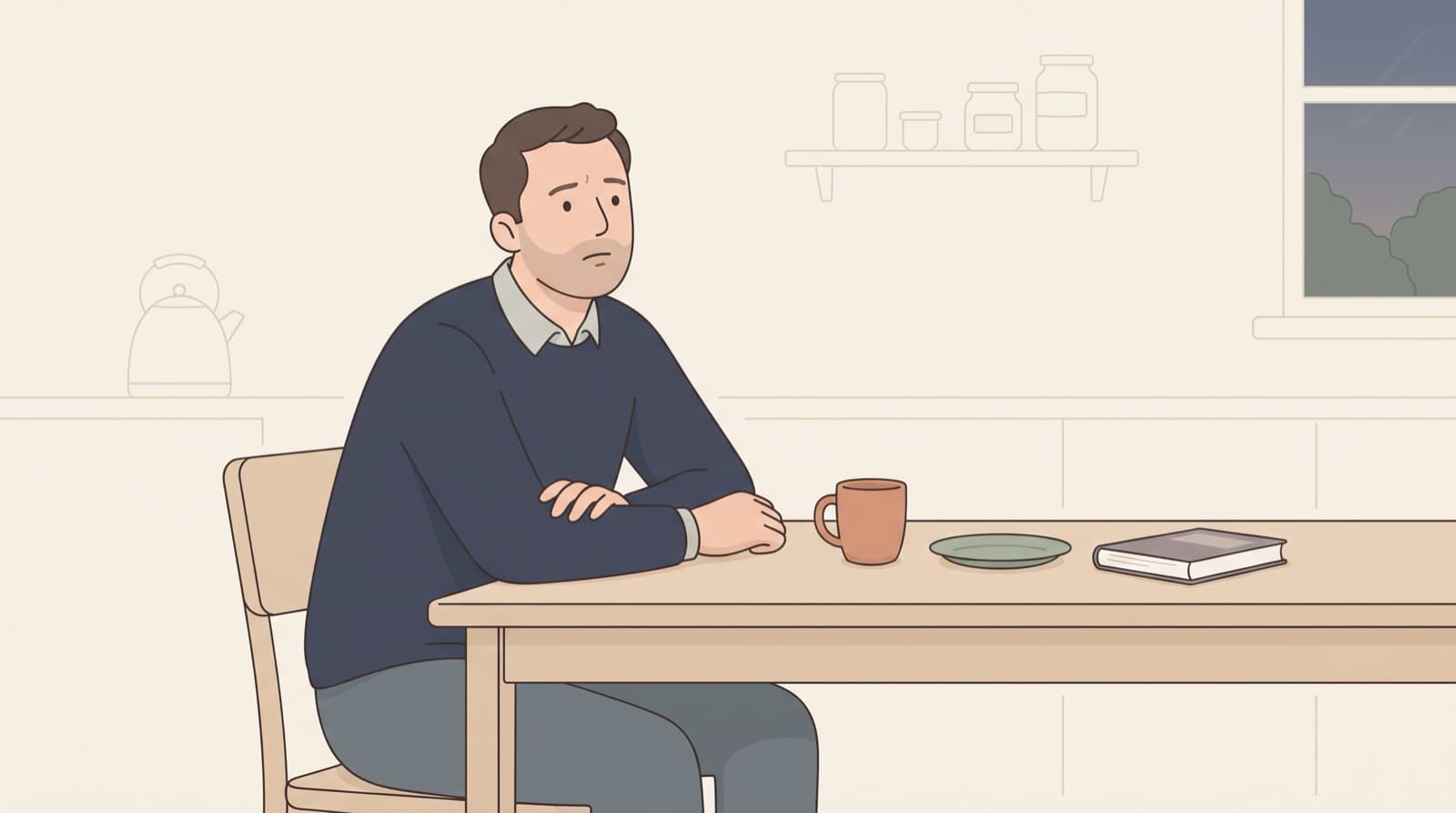
This explainer is also a short documentary.
Watch the episodeAsk someone in debt what they owe, and most will guess.
Not because they're careless. Because in modern Britain, the full number doesn't live anywhere. Not in one app. Not on one screen. Nowhere.
This is about how that happened. How money you legally owe can become invisible, to you, and to the system itself.
Debt used to be easier to see
Fewer lenders. Paper statements. A number you could put your finger on.
Now it arrives in fragments. A credit card here. An overdraft there. Three instalment plans in three different apps, each one polite, each one small.
And here is the thing about fragments. Each app is honest about its own piece. The card knows its balance. The instalment plan knows its schedule. But no screen anywhere adds them up.
The total exists in only one place. Reality. And reality doesn't send notifications.
The repayments scatter too. One comes out on the 1st. One on the 15th. One a few days after payday. No single day of the month shows you the whole weight, just a series of small exits, each one survivable on its own.
The stranger who builds your total
Last year, Citizens Advice helped more than 407,000 people across England and Wales with debt problems. That is up 44 per cent since 2021. The average amount owed by the people they helped was £8,932. Four years earlier, it was £6,557.
But inside those advice sessions, something quieter happens. An adviser sits down with a person and lists everything. Every card. Every app. Every account. Then adds it up.
For some people, that is the first time the total has ever existed in one place. And it took a stranger to build it.
One in three people in problem debt couldn't afford essentials like food at some point in the last six months. The pressure was real the whole time. The picture wasn't.
The pressure was real the whole time. The picture wasn't.
Hiding place one: the apps
In 2017, buy now pay later was a £60 million corner of British borrowing. By 2024, it was over £13 billion. In the Financial Conduct Authority's Financial Lives survey, 10.9 million UK adults had used it in the twelve months to May 2024. One in five.
Each purchase is its own small agreement. Its own schedule. Its own app. Its own login. Borrowing that used to sit on one statement is now scattered across the phone.
Hiding place two: what the apps didn't have to say
For years, telling the credit reference agencies about this borrowing was voluntary. Some firms chose to report. Klarna started sharing data with Experian and TransUnion in 2022. Others didn't. Clearpay, at the time, reported to no credit reference agency at all.
Which means two apps could sit side by side on the same phone. Same person. Same month. Same kind of borrowing. One visible on your credit file. One invisible to every other lender.
Hiding place three: the credit file itself
A credit file sounds like the full picture. It isn't.
Britain has several credit reference agencies, and lenders have never been required to tell all of them. Report to one, skip the others. Three agencies can hold three different versions of you.
The regulator said it plainly this February. Where the information agencies hold is limited, people face barriers. So it proposed a simple rule: if a lender shares your information with one agency, it should have to share it with all of them.
That rule had to be proposed. In 2026. Because it still wasn't the norm.
The harder truth underneath
Hold all three layers together, because there is something worse beneath them.
Affordability checks. The thing designed to protect you. A lender looks at your file and asks, can this person manage more? For years, that check was being run on a partial person. The visible debts, weighed carefully. The invisible ones, not weighed at all.
And the people carrying the invisible kind were not a random slice of Britain. The regulator's own research found that buy now pay later users are, on average, younger. Less creditworthy. Carrying more unsecured debt than people who don't use it.
The least visible borrowing was concentrated in the hands of the people closest to the edge.
You can see the layering at StepChange, the debt charity. In 2024, the average client owed £15,672 in unsecured debt. Two thirds had credit card debt, averaging £7,424, which means the card was usually only part of it. Even back in 2022, the average client was already holding six separate unsecured debts. Six different balances. Six places to check.
And most people don't check. Research last year found one in five adults avoid looking at their bank balance because of financial anxiety. Under twenty eight, it is more than two in five.
It's tempting to call that denial. It's closer to arithmetic. If the full number can't be assembled, every glance at one fragment is a reminder that you don't know the rest. The system didn't show the total. So the mind stopped asking for it.
Some of the hiding places are closing
On 15 July 2026, buy now pay later came under the Financial Conduct Authority. Lenders now have to check you can afford to repay before they lend. New agreements come with Section 75 protection, the same protection you'd have paying by credit card. And the reporting is expected to follow. Missed payments recorded. Open agreements visible for what they are: open credit.
The credit file reform is a step behind it. Still a proposal. The consultation closed in the spring. But the direction is plain. One picture of one person, held by every agency.
Be honest about the limits. This is stitching, not a finished quilt. The rules are weeks old. Some gaps have closed. Others are still closing.
But notice what the reform admits. For nine years, a whole category of British borrowing grew mostly out of sight. Not because the people using it were reckless. Because the system was built in pieces, and nobody was holding the whole.
If your debt feels scattered and unknowable, that was never a personal failing. The full picture was never handed to anyone. Not to you. Not to the lenders. It always had to be built by hand.
One move
You don't have to wait for the system to see you clearly.
One evening. One page. Every app, every card, every account, every overdraft. Write each balance down, and add them up once.
Not to fix anything. Not tonight. Just so the number finally exists somewhere you can see it.
It will mean opening the apps you've been avoiding. Open them once, for this. You are not checking on your life. You are collecting information.
The entire reform programme above is the system doing exactly this for itself. Slowly. Expensively. Nine years late. Yours fits on one page.
And if the total feels heavy, you don't have to hold it alone. MoneyHelper runs a free debt advice locator. It is confidential, government backed, and connects you to free advice online, over the phone, or face to face. Advisers sit down with totals like yours every day.
The number is allowed to exist. Seeing it is where dealing with it starts.
Free, confidential debt help
You don’t need a plan, or your paperwork in order, before you contact any of these. Most people don’t have either.
Citizens Advice
Local and online guidance on debt, benefits and consumer rights.
citizensadvice.org.ukCashflow Confessions is an editorial and educational platform. We do not provide financial advice or debt solutions.
The story behind the story
One considered email when a new story lands, with the context and sources that didn't fit inside the documentary. No marketing, and you can leave whenever you like.