The Debt That Was Hidden From Her
Seven apps. Fourteen payments a month. £2,340. I was not hiding this debt from anyone. It was hidden from me, and the number did not exist until I wrote it down.
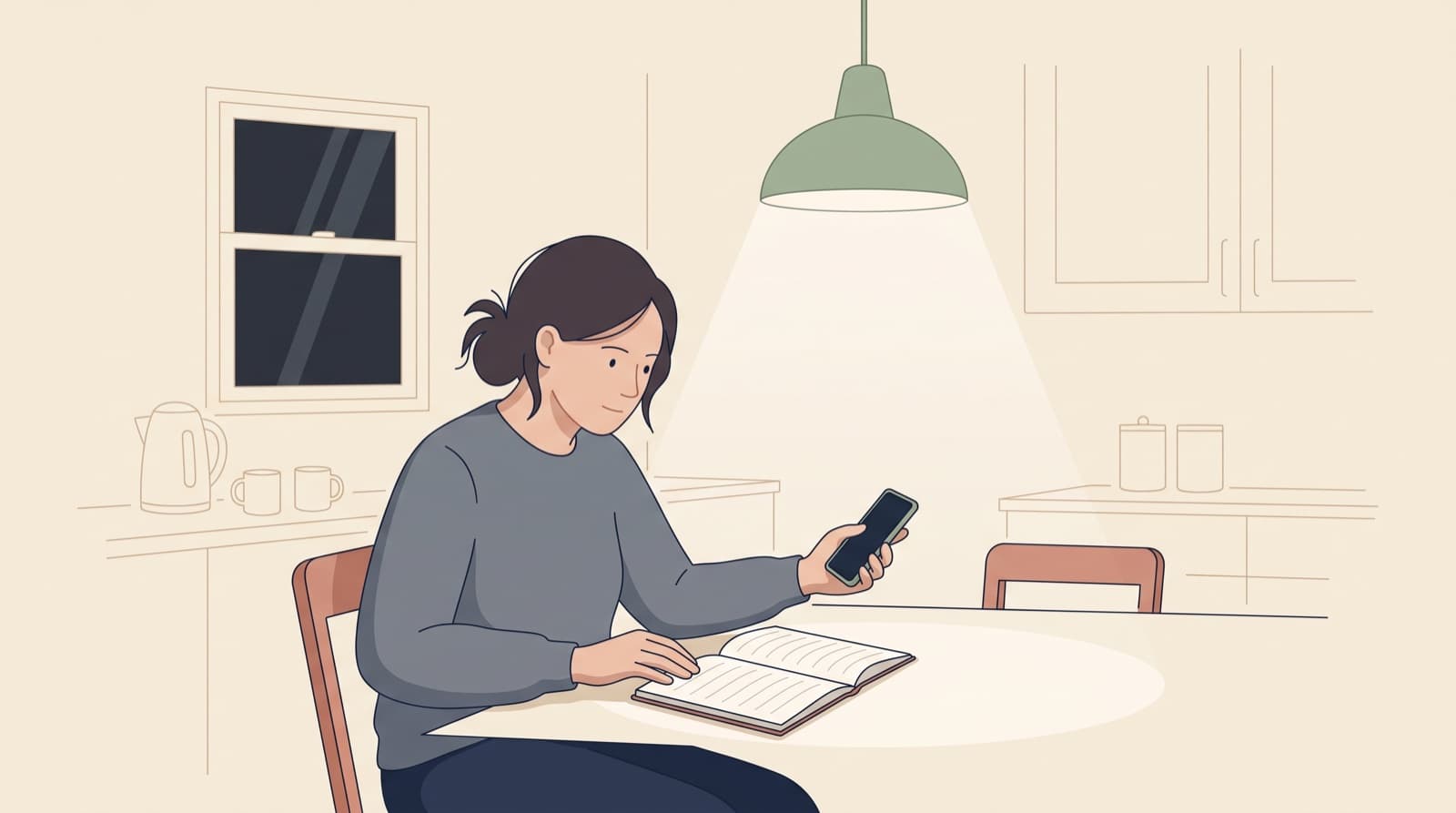
“You cannot lose track of a total that was never kept. Nothing and nobody had ever been asked to add it up.”
The night I finally added it up, I had to search my own email to find them all.
Seven apps. Fourteen payments a month. £2,340.
It started with a new debit card
My old card expired. The replacement arrived, and I updated the apps I could think of.
A week later, an email came from a company I did not recognise. A payment of £11 and change had failed. A late fee had been added. I had to scroll back through my inbox to work out what I had even bought.
That evening I sat down with a notebook and tried to write out everything I owed. It took four attempts, across two evenings. Not because the numbers were hard. Because the list kept growing.
The sofa app. The trainers app. The one my bank kept offering me. The one from Christmas. The one I was sure I had closed.
I searched my email for the word payment. And the payments were everywhere. £8.66. £27. £43.33. Fourteen of them a month, on eleven different days. None of them had ever felt like a repayment. They felt like weather.
At the bottom of the page I wrote the total and circled it. £2,340.
Not a catastrophe. Something stranger than that. I earn decent money. I had never missed a payment until the card expired. And I had genuinely not known.
So how was it hidden from me?
Rewind three years. Every one of those agreements made sense on the day I opened it.
The sofa, when I moved flats: £520 over twelve months, instead of emptying savings that would not have survived it. Trainers. An outfit for a wedding. A present for my niece, £38, in three payments. A cracked phone screen. Christmas. Then another Christmas.
Not one of those screens ever showed me the word debt. That was my experience, every single time. Three payments of £43.33. Never £130 of borrowing.
The apps were friendly and pastel and on first name terms with me. Paying felt like a subscription. Not a loan.
And there were no statements. Nothing came through the door. Each app quietly charged my card and told me only about itself. Seven separate versions of the truth. None of them lying. None of them whole.
I was not unusual
People who use these apps are, on average, younger than the country as a whole, and they earn slightly more, not less. Mine is not a story about poverty. It is a story about fragments.
By the end, around a sixth of my take home pay was spoken for before the month began. £1,940 would arrive. And £310 of it already belonged to the apps, in fourteen small pieces.
I assumed the full picture existed somewhere. My bank. My credit file. Some regulator's computer. Surely someone could see the whole thing, and would say something if it mattered.
That assumption was wrong. And the reason it was wrong is the real story here.
The country I was doing this in
In the twelve months to May 2024, one in five UK adults used buy now pay later. Almost eleven million people. Lending through it grew from £60 million in 2017 to over £13 billion in 2024. StepChange, the debt charity, says it is now as common as having an overdraft.
And it is small by design. The FCA puts the average purchase at £88. Small enough to feel like nothing. That is the appeal. That is also the problem.
One national survey had to list nine different providers by name, just to ask people which ones they had used. Nine, before the box marked other. Seven apps is not an extreme story. It is an ordinary one.
Here is what stacking looks like in the data. In that same research, 22 per cent of people using these products had fallen behind on at least one agreement within a year. And the risk climbs the more you use them. The people who used these apps more than ten times were over four times as likely to have missed a payment: 27 per cent of them, against 6 per cent of less frequent users.
Among the people who did fall behind, some covered it by borrowing from another buy now pay later app. The debt did not get solved. It moved sideways, into a new pocket of invisibility.
The advice services can see the queue forming. In one month this year, Citizens Advice helped 844 people with a buy now pay later problem. Almost double the number from the same month two years earlier. More than eight in ten of them were struggling with repayments.
The debt Britain could not see
To be fair to the numbers, this is still the small end of British debt. Only a small slice of new unsecured lending. Credit cards dwarf it. This is not the biggest debt in Britain. It is the debt Britain could not see. And that is not a figure of speech.
Until July 2026, interest free buy now pay later was not regulated credit in this country.
Sit with that for a moment. For the entire three years I was building those seven balances, none of it was covered by the consumer credit rules that govern a credit card or a loan. No affordability checks were required. No provider was required to report to a credit reference agency. One large provider chose to, from 2022. Most did not. The credit rulebook simply did not reach it.
So seven lenders each saw one small, punctual, well behaved customer. Each app could only ever see its own slice. My credit file held fragments at best. My bank saw card payments going out, not credit agreements piling up.
There was no screen, anywhere, that showed the whole picture. The number £2,340 did not exist until I wrote it down.
The thing I got wrong about myself
For months afterwards I read that page as evidence against myself. How does a grown woman not know what she owes?
But look at it properly. You cannot lose track of a total that was never kept. Seven companies, between them, knew everything. No law required the pieces to be put together. My not knowing was not a personal failure. Nothing and nobody had ever been asked to add it up.
I told no one, all that time. Half of UK adults have experienced problem debt. Of those, nearly half told nobody at all. But my silence had a twist. You cannot confess a number you do not know.
What changed, and what didn't
Then, in July 2026, the rules changed. Buy now pay later became regulated credit. Lenders now have to check you can afford it before they lend. They have to support you if you are struggling, and point you to free debt advice. Complaints can now go to the Financial Ombudsman. And reporting to credit agencies is becoming consistent, instead of optional.
The blind spot I lived inside is being closed.
But be clear about what regulation does. It changes what happens at the next checkout. It does not add up anyone's past. No new rule will ever write your list for you. Mine took a pen, two evenings, and four attempts.
One move
Make the total exist.
One page. Paper, or a notes app. Every app, every balance, every monthly payment, in one place. Search your email the way I did. Let the list be longer than you expected. Write the total anyway.
There is a free tool built for exactly this: MoneyHelper's budget planner. It is government backed, it costs nothing, and it lets you put every commitment in one place, buy now pay later included. And if the total frightens you, StepChange offers free debt advice. These are ordinary debts. Free debt advice covers them too.
My page is still in the notebook. The circled number is smaller now. Not dramatically. Steadily.
The debt did not grow the night I wrote it down. It just stopped hiding. And every payment since has done something my seven apps never managed. It made a number get smaller, somewhere I could see it.
Free, confidential debt help
You don’t need a plan, or your paperwork in order, before you contact any of these. Most people don’t have either.
Citizens Advice
Local and online guidance on debt, benefits and consumer rights.
citizensadvice.org.ukCashflow Confessions is an editorial and educational platform. We do not provide financial advice or debt solutions.
The story behind the story
One considered email when a new story lands, with the context and sources that didn't fit inside the documentary. No marketing, and you can leave whenever you like.