£3,800 Behind on Council Tax
It started with one missed payment of £175. Fourteen days later I legally owed the rest of the year. I hadn't bought anything.
“My debt is not £3,800 because I overspent by £3,800. It is £3,800 because a two week gap in September met a rule that turns a missed month into a year.”
I am £3,800 behind on my council tax. It started with one missed payment of £175. Fourteen days later, I legally owed the rest of the year.
I hadn't bought anything.
The drawer
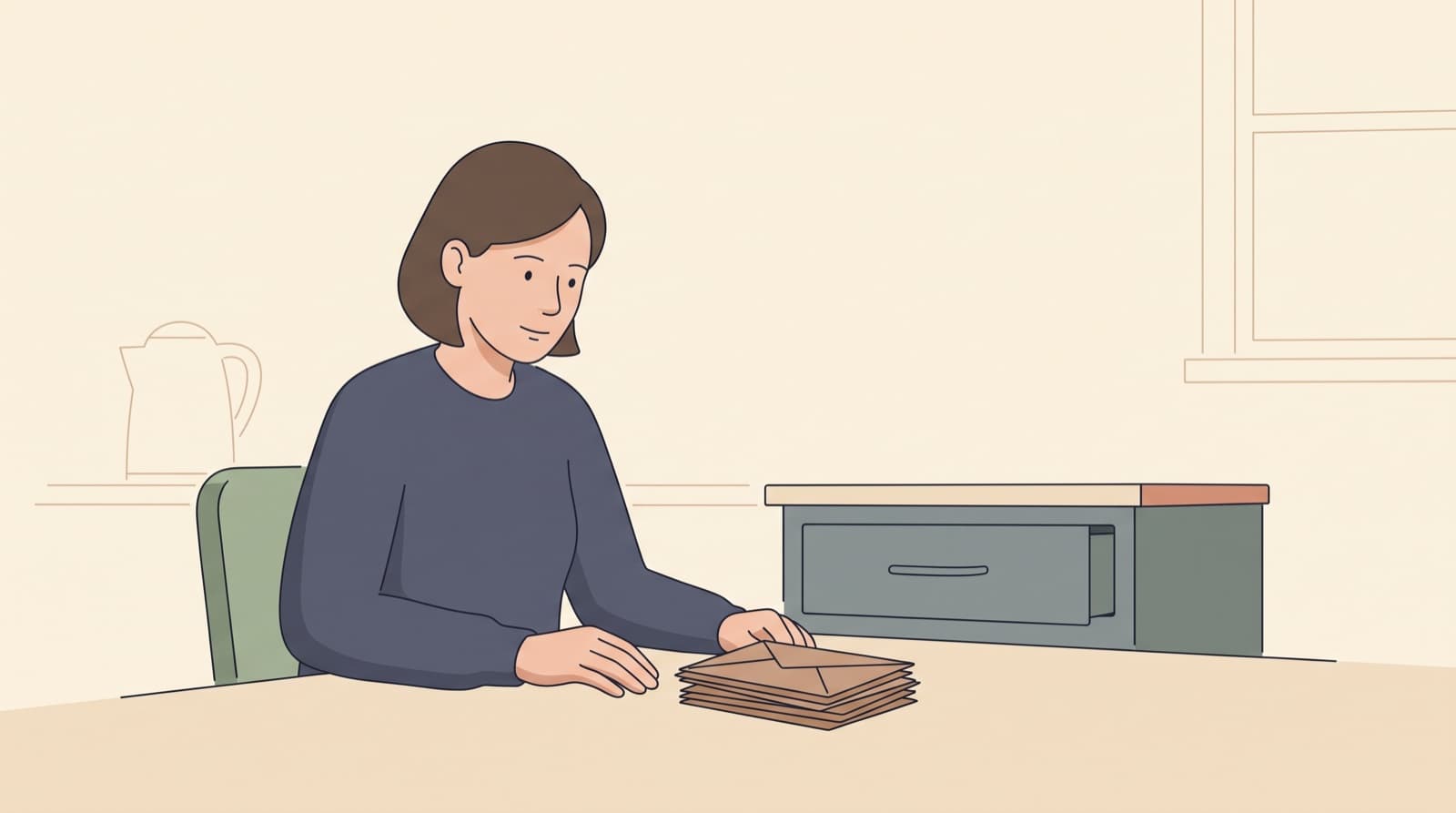
There is a drawer in my kitchen I don't open. Everything in it is from the same place. I know roughly what the letters say. I have known for three years.
I work full time, in a hospital laundry. I live alone, in a two bed terrace. I have not been on holiday in any of those three years.
The £3,800 has built up across three council tax years. There are court costs on top of it. And a fee of £79, from the most recent letter.
A year ago I could not say that number out loud. I can now. That is the only thing about it that has changed.
And here is the part that makes it hard to talk about. I cannot point at anything I bought with it. There is no holiday, no sofa, no night out. Nothing to hold up and say, that was where the money went.
Debt with no purchase attached to it is difficult to explain to anyone. Including yourself.
How a bill I was paying became £3,800
The rules that follow are England's.
My council tax bill was £1,750 a year. It was collected over ten monthly payments of £175, April to January. February and March look free. They are not free. They are the two months the whole year has already been squeezed into.
Three Septembers ago, the clutch went on my car. I need that car for a shift that starts at six in the morning. The repair came out of my account first. Four days later, the council tax direct debit bounced. £175.
I meant to sort it on payday. That is the whole of it. The plan was fine. The timing was not.
The reminder notice arrived. It gave me seven days to clear the arrears. Payday was eleven days away.
When those seven days passed, another seven began. And at the end of them, something happened that most people only find out about when it happens to them.
I lost the right to pay in instalments.
The unpaid balance of the year became legally due, all at once. Not the £175 I had missed. Everything still to come.
I had paid April to August. Five payments. The remaining £875 was now owed in full.
Nobody decided that. No one at the council opened my file and chose it. That is simply what the regulations say happens.
I had missed £175. A fortnight later I owed £875.
Nobody decided that. That is simply what the regulations say happens.
Then a final notice. Then a liability order at the magistrates court, with the council's costs added on top.
And the following April, while I was still repaying that, the new year's bill arrived. A full year, plus a catch up, on a budget that had never quite managed a full year on its own. I fell behind again that autumn. The same fourteen days ran again.
Three council tax years. Court costs on two of them. One enforcement letter. £3,800.
I was not the exception on my street
For three years I believed I was the only person on my street who could not manage a bill that everybody else seemed to pay.
At the end of March this year, the total council tax owed in England reached £7.4 billion. That was up almost 12 per cent in a single year.
More than one in three people who go to StepChange for debt help are behind on their council tax. Across a recent year, their arrears averaged around £2,000.
And in its most recent published year, Citizens Advice helped more than 86,000 people with council tax arrears. Council tax is the second biggest debt problem people bring to them. Only energy is bigger. A quarter of those people need advice about bailiffs.
I was not the exception on my street. I was in a queue of tens of thousands. And when that many people end up in the same place, the problem is usually not the people.
The rule nobody tells you about
Council tax does something that almost no other household bill does. Miss a single payment, and the rest of the year can stop being instalments and become one debt, due now. Not after months of ignored letters. Fourteen days.
That is not a recent crackdown. It is written into regulations from 1992, and it is still the law today.
And it tightens. If a second reminder goes out in the same year, that grace disappears. Miss a payment after that, and the remaining balance can fall due the following day.
Then comes the part that catches people twice. Once a year has been accelerated like that, repaying it lands on top of the next year's bill. Falling behind once makes falling behind again more likely. Not through carelessness. Just arithmetic.
The system that does this was not built to punish anyone. It exists to protect the money that pays for bin collections, and social care, and street lights. The difficulty is that it applies the same fourteen days to someone avoiding a bill and to someone whose clutch went in September. The rule does not tell them apart.
What protections exist
Some of them are newer than most people realise. Since May this year, an enforcement agent has to give fourteen clear days notice before acting, instead of seven. Up to twenty eight days if a debt adviser is involved. The fees are fixed and published: £79 at the first stage, £247 if an agent actually visits. They are not invented household by household.
There is also Council Tax Reduction. For people on a low income, it can bring a council tax bill down, and in some cases bring it down to nothing. Every council runs its own scheme, so what it means where you live depends on where you live.
And the worst version of this, the one people lie awake imagining, is a legal power in England that is almost never used. Courts do still make suspended orders. But between 2019 and 2023, nobody was actually sent to prison for not paying council tax.
The gap is not a measure of your character
If your own arrears look impossible next to what you actually failed to pay, it is worth looking at how much of that gap is acceleration, court costs and fees, rather than anything you spent.
And those fourteen days are the hinge. Which means they are also the place where this can go differently.
One move
If a reminder notice has arrived, or you already know a payment is about to fail, there is one realistic move. Contact the council before that window closes, and ask to pay in smaller amounts.
Citizens Advice's own first piece of guidance on council tax arrears is to contact the council straight away, rather than waiting to be contacted. A reminder notice is not only a demand to be endured in silence. It is a period in which the escalation has not happened yet.
The council does not have to agree. But that conversation can only do anything while the window is still open.
This does not clear anything. It does not need to. It is about the speed, not the amount. The speed is the part of this you can sometimes get in front of.
And if you are already past that point, you do not have to work it out on your own. Citizens Advice is free and confidential, and council tax is one of the things they deal with most.
I opened the drawer in February. It took me four days to work up to the phone call, and eleven minutes to make it. I agreed an amount I could actually pay each month. It is not fast. It will take me years.
The £3,800 is still there. But nothing new has been added to it since. And I stopped carrying it on my own.
Free, confidential debt help
You don’t need a plan, or your paperwork in order, before you contact any of these. Most people don’t have either.
Citizens Advice
Local and online guidance on debt, benefits and consumer rights.
citizensadvice.org.ukCashflow Confessions is an editorial and educational platform. We do not provide financial advice or debt solutions.
The story behind the story
One considered email when a new story lands, with the context and sources that didn't fit inside the documentary. No marketing, and you can leave whenever you like.