I Was Scammed Out of £14,000
My bank called to warn me about fraud. The call was the fraud. There was no shouting and no countdown, which is the part people get wrong about scams like this.
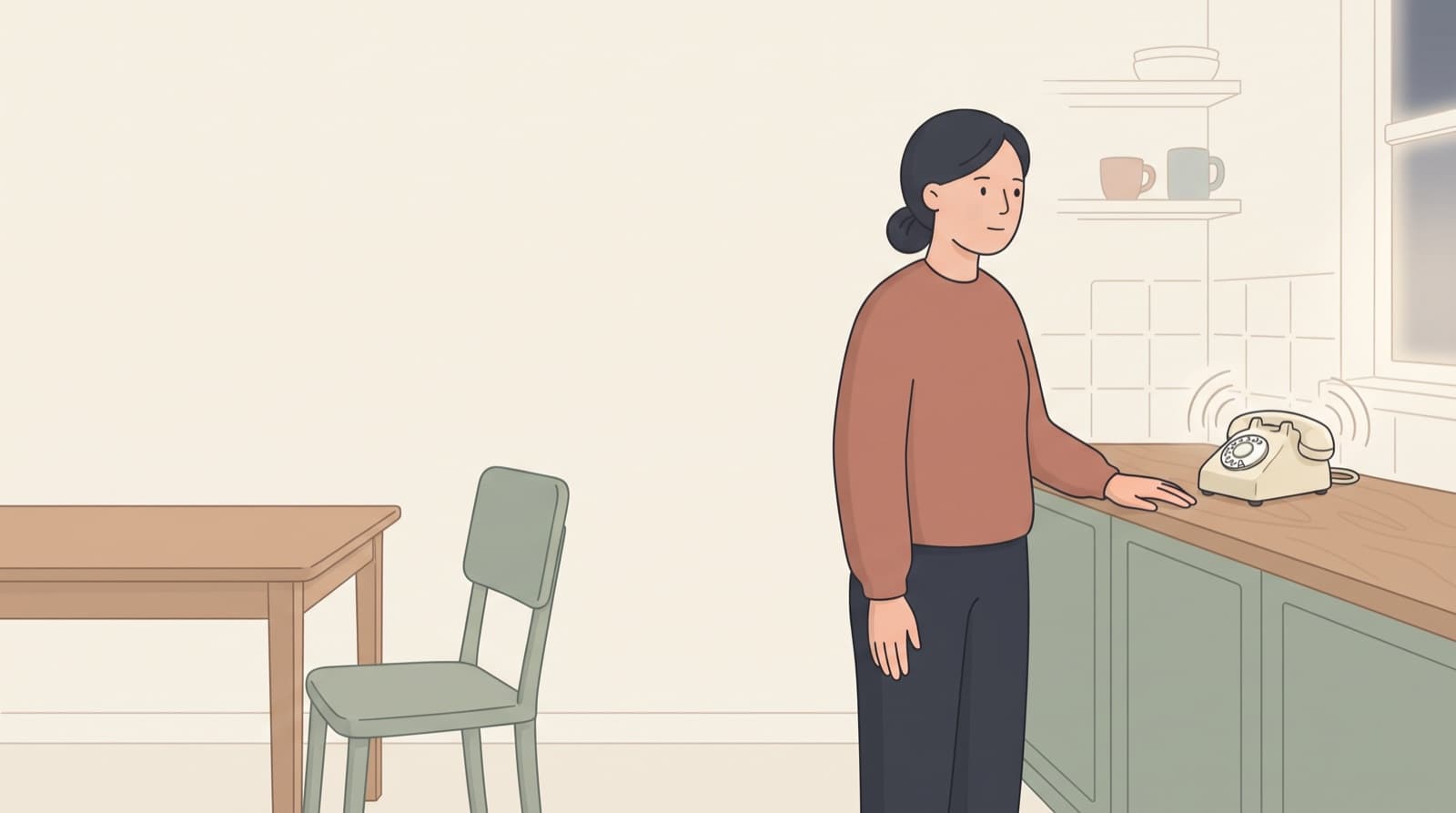
“When I sat there thinking, how could I fall for this, the honest answer is that I didn't fall. I was pushed.”
My bank called to warn me about fraud. The call was the fraud.
An ordinary Tuesday afternoon
A withheld number. A calm voice. He said he was from my bank's fraud team. He knew my name. He knew things only my bank should know. He said there had been suspicious activity. And he said it the way real banks say it. Measured. Procedural. Slightly bored.
There was no shouting. No countdown.
That is what people get wrong about scams like this. They imagine panic. Pressure. Someone demanding gift cards. This was nothing like that. This sounded like a man doing his job.
He told me the account was compromised. He told me the money needed to be protected. And he told me the bank had set up a safe account, in my name, ready to receive it. All I had to do was move it. Not give it to anyone. Just move it. From one account to another. My money, going to me.
That is how it was framed.
So I opened my banking app. And over one afternoon, in stages, I transferred £14,000. Savings that had taken years. Birthdays. Overtime. The careful months.
Each transfer went through in seconds. Each one felt like protection.
Then the call ended. And I sat with my tea going cold, feeling relieved.
The feeling lasted about an hour
I rang the number on the back of my card. Just to confirm it was all sorted. The real fraud team answered. And the real fraud team had never called me.
There is a particular silence that follows that sentence. People who have lived it describe the same thing. The room stays normal. The radio keeps playing. And somewhere underneath, the floor quietly disappears.
My first thought was not the money. My first thought was, how do I tell anyone this.
That evening I cooked dinner as normal. I listened to my husband talk about his day. And twice I opened my mouth to say it, and twice I talked about something else instead.
It took me until the next morning. Not because he would be angry. Because saying it out loud would make it true.
What I was actually up against
Hold that thought, because before the shame settles in, it is worth looking at the scale of this.
In 2025, criminals stole £1.28 billion through payment fraud in the UK. Over four million confirmed cases. That works out at nearly eight cases every minute. Not eight a day. Eight a minute.
And the specific thing that happened to me has its own name. Authorised push payment fraud. Authorised, because the victim presses the button themselves. That is the entire design of it. The criminal never touches the account. They just build a story convincing enough that you move the money for them.
In 2025, that one category cost people in the UK more than £576 million. 248,000 separate cases. Up 19 per cent in a single year.
And here is the number that matters. Across fraud as a whole, most losses are small. The official crime survey for England and Wales found 70 per cent of victims lose less than £250. Only 1 per cent lose £10,000 or more.
£14,000 is not a typical scam. It is the far end of the scale. The kind of loss that changes what the next year looks like.
Falling for it is not a measure of intelligence. It is a measure of how good the performance was.
So when I sat there thinking, how could I fall for this, the honest answer is that I didn't fall. I was pushed. By people who do this professionally, hundreds of thousands of times a year, with a script refined on every person who came before me.
What is supposed to happen next
Since October 2024, banks have been required to reimburse people who were tricked into transferring money to a criminal. Up to £85,000. There are conditions, and I will come to them. But the starting position is reimbursement. Not as a goodwill gesture. Not if they feel like it. As a rule.
And mostly, it works. Under that scheme, 88 per cent of the money lost has been reimbursed. Most claims are settled within five working days.
But mostly is doing quiet work in that sentence.
If the bank needs to investigate, it can take up to thirty five working days. That is seven weeks. And nearly one in five claims takes longer than the standard five days.
Seven weeks is an abstract number until you live inside it. For me it meant explaining a £14,000 hole to my husband. It meant an arranged overdraft for the first time in a decade. It meant a direct debit I watched like a weather forecast. It meant lying awake doing arithmetic I had already done.
The money was probably coming back. Probably is not a word you can pay a bill with.
And nobody at the bank was unkind. That is worth saying. The people on the phone were patient and sympathetic. But sympathy does not change a timeline. The claim moved at the speed of the process, not the speed of my month.
The conditions
Around three in every hundred claims are refused. The reason given is that the customer did not take enough care.
Read that from inside my kitchen. A professional criminal spent an afternoon impersonating my bank. And the question the system asks is whether I was careful enough.
This is why so many people never talk about it. Official figures show 13 per cent of fraud victims describe feeling shame, embarrassment, or self blame. Seventy one per cent describe some kind of emotional impact. Anger. Shock. A loss of confidence that outlasts the money.
The money came back
Five weeks later. The full amount. It arrived without ceremony, the same way it left. A number on a screen.
But the money was only half of it. The other half was the version of myself I had to sit with for five weeks. The one who felt foolish. The one who rehearsed telling people and then didn't.
One move
If money leaves your account and something feels wrong, the move is one word. Report. The same day if you can.
Start with your bank, on the number printed on your card, never a number you were given. Then Action Fraud.
You have thirteen months to make a claim. But the clock on getting the money back only starts when you do. Claiming that money back is not an admission that you were careless. It is the system doing the one thing it was redesigned to do.
I kept the number the scammer called from. I never found out who he was. Most people never do.
But I stopped asking how I could have been so stupid. Because that was never the right question. The right question is why the call sounded so real. And the answer to that one was never my fault.
If this is your situation right now
These services specialise in exactly this. They are free, confidential, and used to the conversation you might be dreading.
Action Fraud
The national reporting centre for fraud and cybercrime in England, Wales and Northern Ireland. Reporting starts the clock on getting money back. In Scotland, report to Police Scotland on 101.
actionfraud.police.uk0300 123 2040Mon to Fri 8am to 8pm, or report online at any time
Victim Support
Free, confidential support after a crime, including the shame and shock that follow a scam. Independent of the police, and available whether or not you have reported it.
victimsupport.org.uk0808 168 9111Free, 24/7
Free, confidential debt help
You don’t need a plan, or your paperwork in order, before you contact any of these. Most people don’t have either.
Citizens Advice
Local and online guidance on debt, benefits and consumer rights.
citizensadvice.org.ukCashflow Confessions is an editorial and educational platform. We do not provide financial advice or debt solutions.
The story behind the story
One considered email when a new story lands, with the context and sources that didn't fit inside the documentary. No marketing, and you can leave whenever you like.