The Funeral Debt Nobody Warns You About
Three days after my father died, I was sitting in a funeral director's office holding my credit card. Nobody in that room asked whether I could afford it. And nobody told me I didn't have to.
“His debts ended when he did. The only debt that survived him was the one created to bury him. And that debt was never his.”
The deposit was £900. It had to be paid before the funeral could happen.
The office was quiet and kind. Soft chairs. A box of tissues. A folder of coffins with names like The Windsor. I had never seen the price of a coffin before. You only learn these numbers once you are already inside.
Every choice comes in three versions
Nobody wants to be the person who says "the cheaper one" about their own father.
Every choice comes in three versions. Every upgrade is a hundred pounds here, two hundred there. And every single one of them feels like love.
So the numbers climbed, gently, politely. The service. The cars. The flowers. The order of service with his photograph on the front. By the end, the total was £4,600.
The deposit took what was left of my savings. The rest arrived as a bill, soon after the funeral. That is when funeral bills arrive. After.
£3,700 went on my credit card.
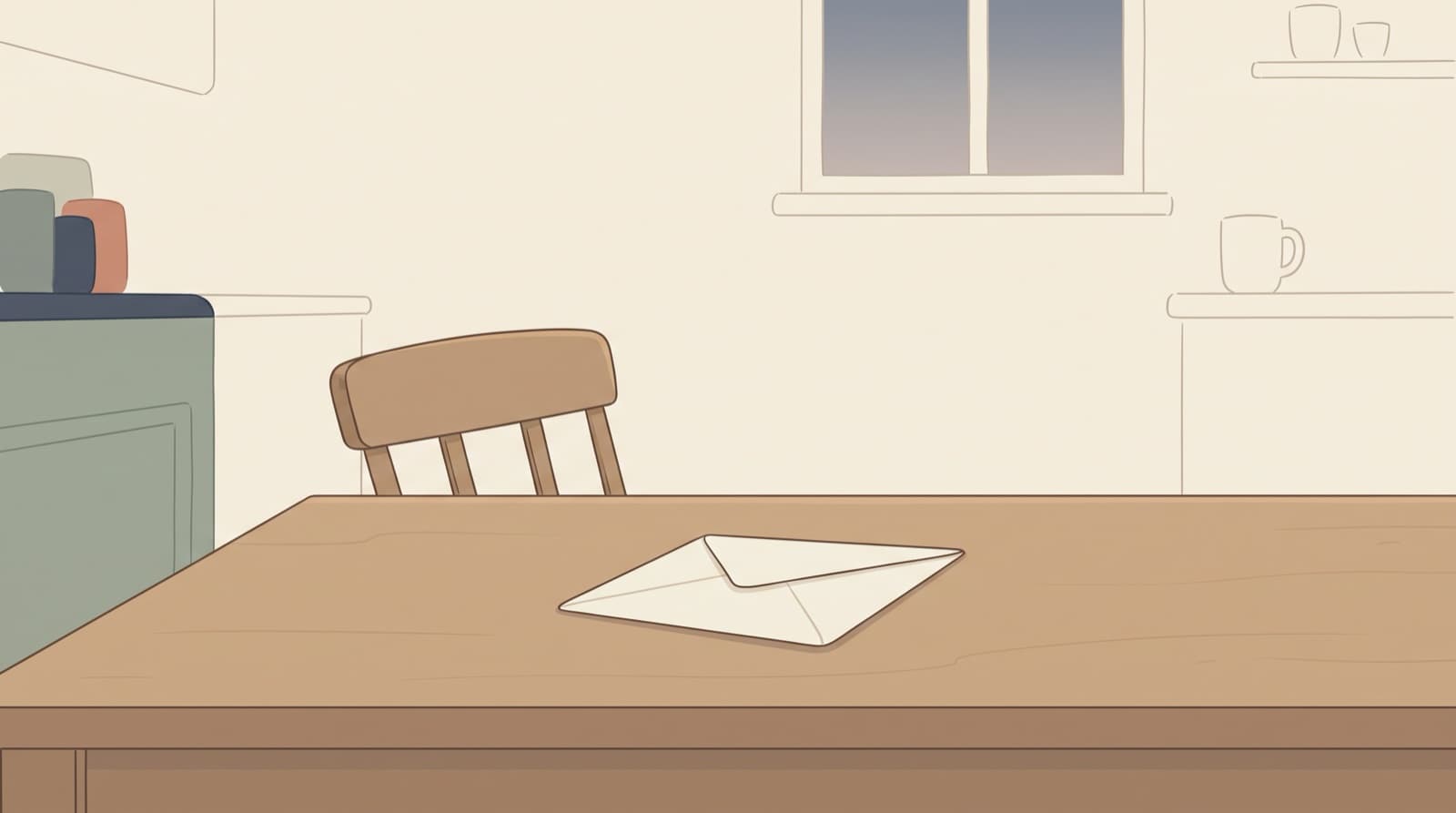
The funeral itself, I barely remember. It passed in a blur of handshakes and sandwiches. What I remember is the envelope, three weeks later. Not the eulogy. The statement.
Nobody teaches you the timetable of death
My dad was not careless with money. He just never had any spare. A state pension. A rented flat. No savings. No funeral plan. He didn't like talking about dying, so nobody did.
And nobody teaches you the timetable of death. The funeral has to be arranged within days. The deposit is usually due before the service can take place. The biggest financial decisions of the year get made in the worst week of your life, by people who haven't slept.
I am not unusual. Among families who struggle with funeral costs, more than one in five put the balance on a credit card. Nearly one in four borrow from family or friends. I did both, in a way. The card in my name. And my brother's promise to send money every month.
The promise was sincere. It still is. Some months the money comes. Some months it doesn't. He is not a villain. He is stretched, like everyone else.
But the contract has one signature on it. Mine. Grief was shared between us. The debt was not.
Both of my assumptions were wrong
At the time, I assumed it would work itself out. Dad's estate would cover it, surely. Or the government would help. Two reasonable assumptions. Both wrong. And the reasons they were wrong are the real story here.
Step back from my kitchen table and look at the country. A simple funeral in Britain costs £3,828 on average. With the extras most families choose, the flowers, the cars, the catering, the average spend is £5,140. Costs have risen by a third since 2019.
Nobody budgets for this. There is no direct debit labelled goodbye.
So families bridge the gap however they can. Savings, if there are any. Instalments, if anyone mentions they exist. Loans. Family. Credit cards. And among the families who struggle, seven in ten say the money strain affects their mental health. Grief and debt, arriving in the same envelope.
The help exists, and it is narrow
There is some help from the state. It is called the Funeral Expenses Payment. It is real, and for some families it matters. But it is narrow.
You have to be on a qualifying benefit to get it: Universal Credit, Pension Credit, Housing Benefit. If nobody in the household is claiming a qualifying benefit, there is usually no help at all.
And even if you qualify, it covers the burial or cremation fee, then caps almost everything else. The funeral director. The coffin. The flowers. All of that, capped at £1,000. Against a £4,600 funeral.
The government's own guidance says the payment will not usually cover all of the costs of a funeral. It has covered only a fraction of the real cost for years. And if you do qualify, the claim must be made within six months of the funeral.
Below all of this there is a floor almost nobody talks about. When nobody can pay at all, the council has to step in. These are called public health funerals. More than 4,400 of them in England in a single recent year, rising by nearly a quarter across two thirds of English councils. That is the quiet scale of families priced out of saying goodbye.
Meanwhile my card balance sits at the average UK credit card rate, around 27 per cent. At minimum payments, a funeral barely shrinks. It just follows you.
The debt that was never his
Here is the part almost nobody in that office knows. The part that changes how this debt should feel.
When someone dies, their debts are paid from whatever they leave behind. Their estate. If they leave nothing, those debts are written off. Nobody inherits them. Not a wife. Not a husband. Not a child.
My dad had an overdraft when he died. It died with him. The bank wrote it off and closed the account.
The funeral contract is a new agreement, in a living person's name.
From the moment I paid that £900 deposit, this was my debt. Owed to my card company. At my interest rate. It never touched my father's estate at all.
There is a rule that should have softened this. Funeral costs are first in line to be repaid from an estate, before almost any other claim. But first claim on nothing is nothing. His estate was empty. There was nothing to claim back from.
And here is the sentence nobody said to me, in that quiet office, with the tissues and the folder. No family member is required by law to arrange or pay for a funeral. If nobody takes it on, the council has a legal duty to provide one.
This is not to say I should have walked away. Almost nobody walks away. That is the point. For a family with nothing behind them, the system offers a choice between a council funeral and personal debt. It gives them days to decide. It caps its contribution at £1,000. That is the help on offer.
The letters still come
The letters still come, addressed to my dad. Statements for accounts that are already closed. The regulator has found that some firms handle bereavement badly, chasing debts that are already settled. If those letters frighten you, the confusion is usually theirs. Unless a debt was joint, or you personally guaranteed it, a debt in his name alone was never yours to pay.
And the debt that is real, the one on my card, is an ordinary consumer debt. Which means free debt advice, like StepChange, applies to it the same as any other.
For months, I read that card balance as proof my family had got something wrong. Spent too much. Planned too little. Loved unwisely.
But look at it again. I loved someone in a country where a goodbye costs thousands. Where the bill arrives with a deadline. Where the help is capped and gatekept. The balance on that card is not a record of carelessness. It is a record of care.
One thing worth knowing
If any of this is close to your life, there is one move worth knowing about.
There is a free service called Down to Earth, run by the charity Quaker Social Action. It exists for exactly this. People facing a funeral they cannot afford, and people already in debt from one. Before a funeral, they help compare quotes and find options nobody mentions in the quiet office. Afterwards, they help with the debt that is already there. They have helped more than 9,500 people through the worst week and what follows it.
I still have the card. The balance is smaller now. My brother sends what he can.
And if you ever find yourself in that office, with the soft chairs and the folder of coffins, I would tell you what nobody told me. The timetable feels absolute. It isn't. There is someone you can call before you sign anything. And even after you have.
If this is your situation right now
These services specialise in exactly this. They are free, confidential, and used to the conversation you might be dreading.
Down to Earth (Quaker Social Action)
Free, confidential help with the cost of arranging a funeral, including what support you may be entitled to. Best contacted before the funeral takes place.
quakersocialaction.org.uk020 8983 5055Free
Free, confidential debt help
You don’t need a plan, or your paperwork in order, before you contact any of these. Most people don’t have either.
Citizens Advice
Local and online guidance on debt, benefits and consumer rights.
citizensadvice.org.ukCashflow Confessions is an editorial and educational platform. We do not provide financial advice or debt solutions.
The story behind the story
One considered email when a new story lands, with the context and sources that didn't fit inside the documentary. No marketing, and you can leave whenever you like.