My Partner Hid £28,000 of Debt From Me
The rent was paid. The birthdays happened. The photographs went online. Then one ordinary day the truth came out, and the debt turned out to be the smaller problem.
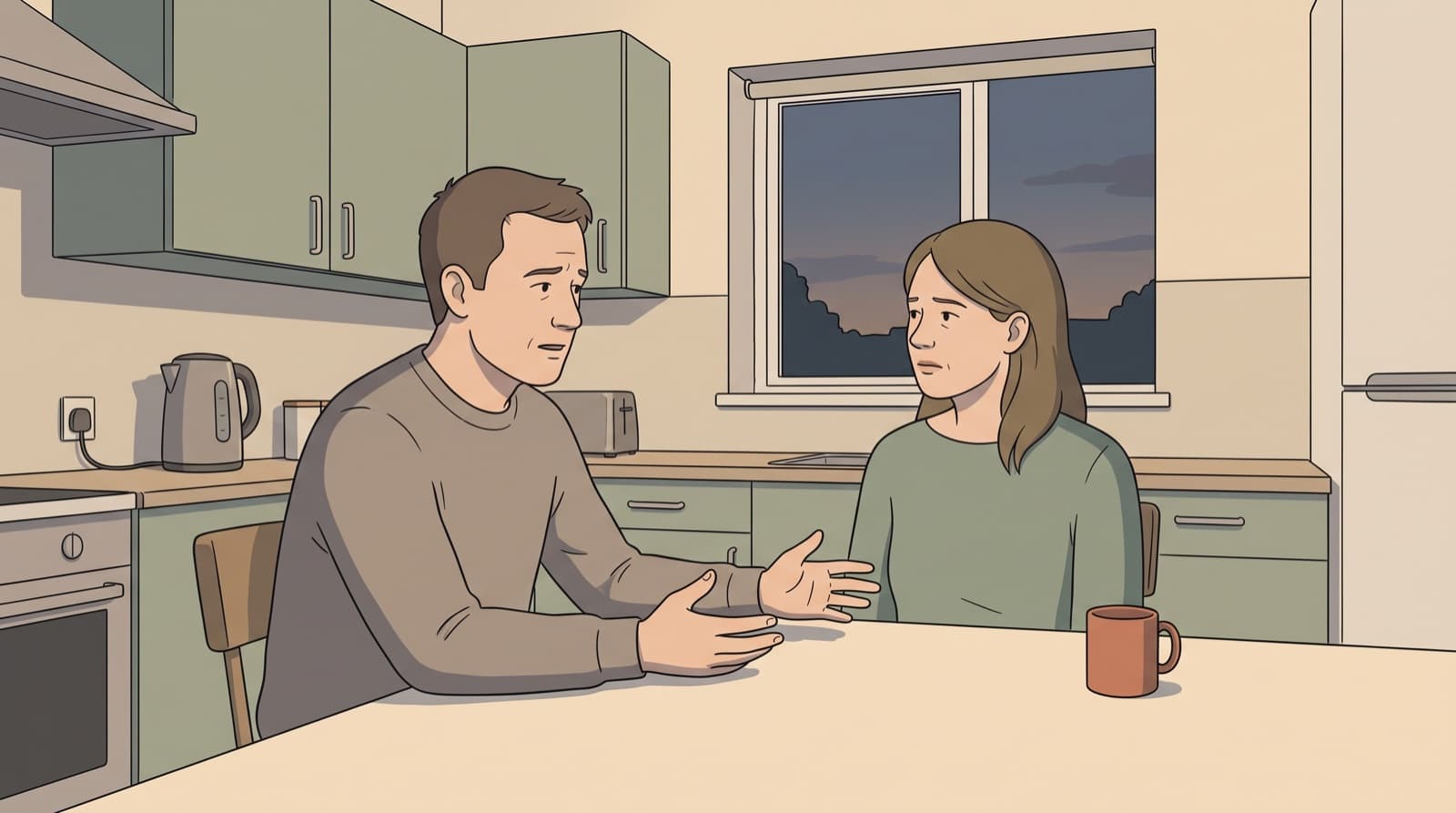
“Trust cannot be refinanced. It cannot be consolidated. It cannot be moved to a different lender. It can only be rebuilt slowly.”
He told me he was managing. He told me things were under control. He told me not to worry. And for a while, there was no obvious reason not to believe him.
Life looked normal. The rent was paid. The shopping was done. The birthdays happened, the photographs were taken, the future was still being discussed. From the outside, there was no crisis.
Then one day, the truth came out. Twenty-eight thousand pounds. Not a small overdraft. Not a missed payment or two. A real debt problem, hidden inside an ordinary life.
The second version of our life
Once the number was out in the open, the issue was no longer just the debt. It was the silence around it, the second version of the relationship that had been running quietly in the background the whole time.
That's what hidden debt does. It doesn't only damage a bank balance. It changes trust. It changes how conversations sound. It changes how memories feel. A late reply starts to mean something different. A vague answer starts to feel significant. A bank notification suddenly attracts attention.
I did the thing I'm told everyone does: I started revisiting old memories. Old conversations. Old explanations. Everything got reviewed through a new lens, not because every moment was dishonest, but because I no longer knew which moments were. Uncertainty is a hard thing to live with.
It didn't start with deception
I understand more now than I did at the time. Hidden debt rarely begins with deception. It usually begins with fear. Fear of looking irresponsible. Fear of disappointing someone. Fear that saying the truth out loud will make it real.
So the conversation gets delayed. Then delayed again. Then avoided altogether. One avoided conversation quietly becomes two, then ten, then fifty. Months pass, life continues, and the secret remains.
And while the secret was being protected, everything still looked normal, because underneath the normal life, another reality was running alongside it. Credit cards, overdrafts, a loan, buy-now-pay-later balances. Minimum payments. Balance transfers. Borrowing used to solve the problems created by previous borrowing.
That's how £28,000 builds without anybody else seeing the picture. Not through one dramatic collapse, through dozens of ordinary moments. A difficult month. A car repair. A broken boiler. A card used to get through the week. A temporary solution that slowly became permanent.
He wasn't thinking I want to deceive my partner. He was thinking I'll sort it out before she finds out. Or I'll tell her next month. Or I just need a little more time. The problem is that debt doesn't wait for people to feel ready. On a balance close to £28,000, interest at around 24.9% can quietly add nearly £600 in a single month. The longer the silence lasted, the more frightening honesty became.
Two problems, not one
When I found out, my reaction wasn't simple. There was sympathy. There was concern. There was even relief that the secret was finally over. But there was anger too, and not really about the debt. About the secrecy. About the decisions made without me. About the feeling that I'd been living beside a version of reality I was never allowed to see.
Hidden debt creates two separate problems at exactly the same time. The financial problem is the easier one: balances, interest, repayments. Those can be worked on.
Trust works differently. It cannot be refinanced. It cannot be consolidated. It cannot be moved to a different lender. It can only be rebuilt slowly, conversation by conversation, action by action, day by day. That's why the £28,000 felt bigger than the number itself.
What I'd want someone else to know
The secret didn't come out because he wanted to confess. It came out because carrying it had become impossible. The debt had a story, and the secrecy had a story too, built from fear, pressure, embarrassment, hope, and the repeated belief that next month would somehow be easier.
We're working through it. Both problems, separately, at their own speeds. The first practical step was getting the full picture in one place and talking to someone neutral. StepChange offer free, confidential debt advice, and nobody there asks whose fault it was.
Debt doesn't always look like crisis. Sometimes it looks like normal life: a normal commute, a normal family dinner, a normal photograph shared online. If something feels unspoken in yours, it might be worth asking the question you've been avoiding. The conversation is hard. The silence is more expensive.
Free, confidential debt help
You don’t need a plan, or your paperwork in order, before you contact any of these. Most people don’t have either.
Citizens Advice
Local and online guidance on debt, benefits and consumer rights.
citizensadvice.org.ukCashflow Confessions is an editorial and educational platform. We do not provide financial advice or debt solutions.
The story behind the story
One considered email when a new story lands, with the context and sources that didn't fit inside the documentary. No marketing, and you can leave whenever you like.