My Son Asked for a Loan I Didn't Have
My son texted, very politely, to ask if I could lend him some money. I read it three times. Not because I did not understand it, but because I already knew I did not have it.
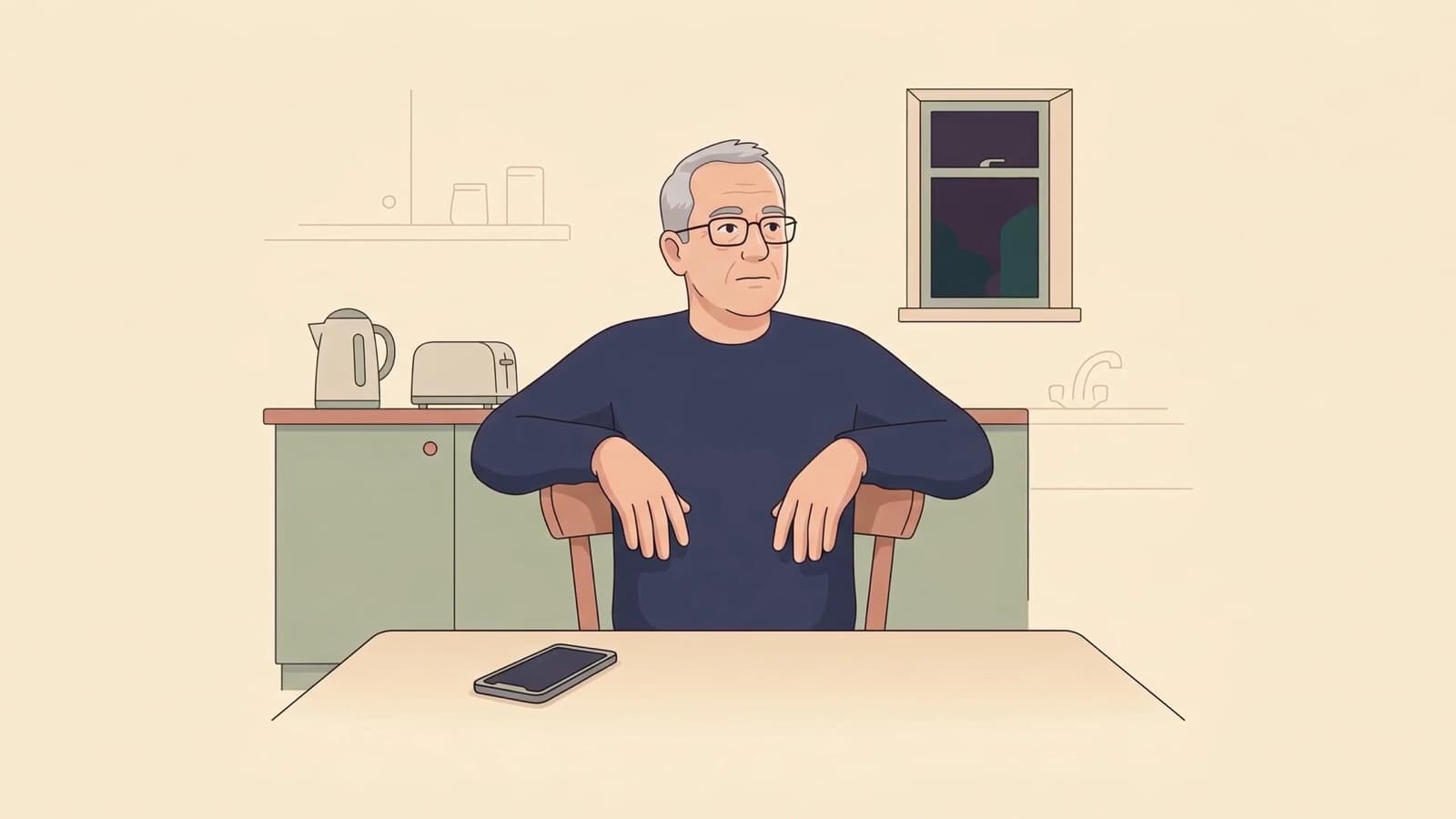
“There is no vault. There is just a parent, deciding what to go without.”
The message came in one evening, and I read it three times. Not because I did not understand it. Because I already knew I did not have it.
It was careful. Almost apologetic. My son would not have asked if there were another way, and that was the part that landed hardest. This was not a young man being careless. This was a young man who had run out of options and worked up the courage to say so.
My reaction was physical before it was financial. A small drop in the stomach. I typed four words back. Leave it with me. That bought me a day, because the honest answer was that there was nothing obvious to reach for.
I have never been a bank
I am not a bank. I have never been a bank. But somewhere along the way, being a parent started to mean being one anyway.
So I keep asking myself how it gets here. How does a grown adult end up asking a parent who has nothing spare? And why does the parent still feel he has to find it?
Why he asked
He did not ask because of holidays or luxury. He asked because the rent takes most of what he earns. Because the deposit he is saving for keeps moving further away. Because the car finally died, or the month simply did not balance.
None of that is unusual. Getting started costs more than it used to, and independence arrives later. Around 28% of people aged 20 to 34 still live with their parents, roughly 3.6 million young adults, and that share has been climbing, not falling. More young people are staying at home longer, and more are turning to a parent when a month does not add up. The gap he is standing in is not a personal failure. It is the same gap millions of families are standing in.
Why I could not say yes easily
I do not have it ready because I am not wealthy. I am an ordinary earner, near the end of my working life. My pension was always going to be tight. My savings are thinner than anyone outside this house would ever guess. From the outside, a working parent in his late fifties can look comfortable. From the inside, the maths is much quieter than that.
Here is the quiet myth in all of it. The phrase Bank of Mum and Dad makes it sound like there is a vault somewhere. For most families, there is no vault. There is just a parent, deciding what to go without.
And I am not alone in deciding it. Three in five parents of grown-up children in this country help them with money. It is not all house deposits: around a quarter of that help goes on the basics, rent, bills, food. The everyday things, not the milestones. When people are asked why, the reasons are simple and they matter. 47% say they want to protect their children from debt or hardship. 46% say they feel a strong sense of responsibility. That is not poor judgement. That is love, doing what love does.
What saying yes actually costs
But love is not free, and this is where it starts to cost. Of the parents who help, 75% say it has affected them financially. More than a quarter have dipped into their savings. Almost a fifth are saving less for the long term. One in eight have put less into their pension than they had hoped. And one in seven now expect to retire later than they planned. A loan to a child, given quietly, can move a parent's own retirement further away.
The one thing meant to be mine at the end, my retirement, becomes the thing I reach for to steady the present.
And when the savings are not there to dip into, the money has to come from borrowing. A parent says yes by reaching for a credit card, or an overdraft, or a debt that is now his, not his child's. That kind of debt is not a story about careless people. In a single year, more than 170,000 people came to StepChange for debt advice for the first time. 60% of them were in work, carrying on average £15,672 of unsecured debt. Ordinary working people, already holding more than anyone would guess. A yes given with love can land on top of a balance like that, and quietly become one more thing to pay.
The shame is in the wrong place
So look at the whole picture. The son asking is ordinary. The father saying yes is ordinary. The cost landing on the parent's retirement is ordinary too. None of it is a character flaw. It is a pattern, repeating quietly across millions of homes.
The real pressure was never decided at my kitchen table. The wages that did not keep pace with the rent. The deposit that grew faster than anyone could save. A retirement that was always going to be modest. None of that was his choice, and none of it was my mistake. It arrived from somewhere much larger than either of us.
If you are the parent who could not say yes easily, hear this clearly. You did not fail your child. And if you said yes, and quietly moved the cost onto yourself, you are one of millions doing exactly that. Either way, the shame is in the wrong place.
One move worth making first
There is no ten-step plan here. You are not short of love, or effort. You are short of a clear picture in the one moment it is hardest to see clearly.
So before answering, there is one move worth making. See the true cost to your own future first, before you decide anything else. For exactly this moment, MoneyHelper offers free, government-backed guidance on lending within a family, and it is built around one honest question: can you give this and be fine if you never see it again, without putting your own future at risk? StepChange and Citizens Advice offer free, confidential help if the money would come from borrowing. None of this is anyone telling you to say yes, or to say no. The move is only to answer that one question calmly, before you answer your child.
I read the message three times because I already knew the answer was meant to be no. The kinder answer might still be no. It might be a smaller yes. It might be a yes with the real cost said out loud, between two adults who love each other. But it is an answer you give once you can see it clearly, not one the moment forces out of you.
Free, confidential debt help
You don’t need a plan, or your paperwork in order, before you contact any of these. Most people don’t have either.
Citizens Advice
Local and online guidance on debt, benefits and consumer rights.
citizensadvice.org.ukCashflow Confessions is an editorial and educational platform. We do not provide financial advice or debt solutions.
The story behind the story
One considered email when a new story lands, with the context and sources that didn't fit inside the documentary. No marketing, and you can leave whenever you like.